Paediatric OT in Bella Vista, across the Hills District and via telehealth

Call Kate 0408 025 507

Does my child need occupational therapy?

If your baby or child is finding movement, play, interaction, learning or everyday routines difficult, Occupational Therapy can help us understand what’s getting in the way and what support they may need.
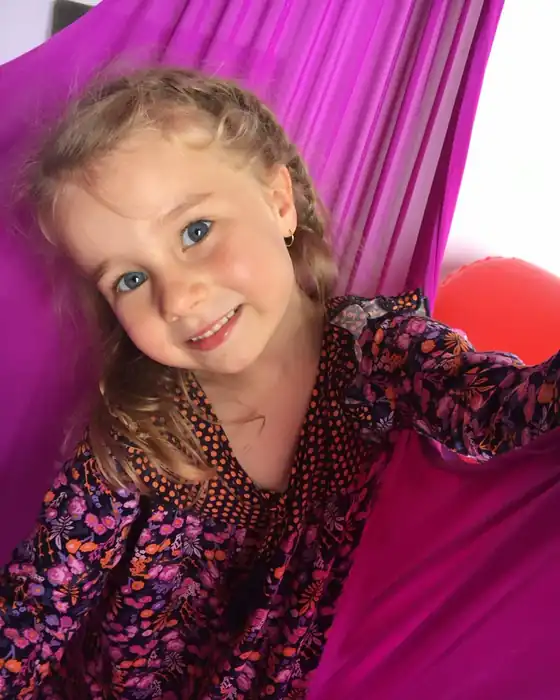
Smiling young girl relaxing in a purple sensory swing

What to look for

We support children from infancy through to the school years, including children with cerebral palsy, physical disability, developmental delays, autism, rare genetic conditions and medical complexities. We choose goals around your child’s abilities, interests and needs. This includes finding ways to participate with assistance or adapted equipment.

Developmental delay can affect movement, communication, learning, play and self-care. Some children need support across several areas, while others have difficulty with particular skills.

Your baby or child may:

  • Have difficulty developing head control, reaching, rolling, sitting, crawling or walking.
  • Need support to move between positions or explore their surroundings.
  • Move one side of their body more than the other.
  • Feel unusually floppy or stiff or find movement effortful.
  • Have difficulty bringing their hands together or towards their mouth.
  • Need support to develop play, social interaction or imitation and cognitive skills.
  • Take longer to learn new skills and need more opportunities to practise.

Hand skills help children explore, play and take part in everyday activities. These skills develop from early reaching and grasping through to managing tools, clothing fastenings and handwriting.

Your child may:

  • Have difficulty reaching towards, grasping, holding or releasing a toy.
  • Find it hard to open their hands or move objects within their hand.
  • Use one hand much less than the other.
  • Have difficulty transferring objects between hands.
  • Need support to use both hands together, such as holding paper while cutting.
  • Find small objects, puzzles, construction toys or containers difficult to manage.
  • Have difficulty holding and controlling crayons, pencils or scissors.
  • Find colouring, drawing, tracing or forming shapes, letters and numbers difficult.
  • Have difficulty using cutlery or managing zips, buttons and shoelaces.
  • Avoid activities that involve using their hands.
  • Benefit from adapted toys, writing tools, utensils or other equipment.

Movement and postural control help children explore, play and manage daily activities. Children with cerebral palsy or physical disability may need support to develop movement skills, maintain comfortable positions and access activities.

Your child may:

  • Have difficulty holding their head or body steady.
  • Need support for rolling, sitting, crawling, standing or walking.
  • Have difficulty moving between positions.
  • Not yet be taking weight through their arms or legs.
  • Have low muscle tone, stiffness, mixed tone or movements that are difficult to control.
  • Find it difficult to maintain a supported, comfortable position for play or learning.
  • Tire quickly or use considerable effort to maintain a position or complete an activity.
  • Have difficulty with stairs, climbing, jumping or playground equipment.
  • Find balance and ball skills difficult.
  • Have difficulty coordinating both sides of their body.
  • Find it hard to reach across their body during play or tabletop activities.
  • Have difficulty understanding or using right and left.
  • Be cautious about movement or having their feet leave the ground.
  • Avoid physical games or activities they find difficult.
  • Need supportive seating, positioning, or adapted equipment to participate.

Children use vision to notice people and objects, guide movement and make sense of what’s around them. These skills support early play as well as develop their skills with puzzles, drawing, reading and other learning tasks.

Your child may:

  • Have difficulty noticing faces or toys or following a moving object.
  • Need extra time to find and respond to something they’re shown.
  • Have difficulty coordinating looking and reaching.
  • Find it hard to locate a toy or item against a busy background.
  • Respond differently depending on lighting, contrast, movement or fatigue.
  • Have difficulty matching pictures, recognising letters or completing puzzles.
  • Find copying shapes, letters or information from a board difficult.
  • Have difficulty with letter size, spacing or organising work on a page.

For children with Cortical Vision Impairment, we consider how the environment and presentation of activities can support their use of vision.

Some children need support with the movements, sensory experiences and physical demands involved in eating and drinking. Others need help with positioning, utensils or participating in mealtime routines. We work with your child’s team where feeding concerns require additional input.

Your baby or child may:

  • Have difficulty coordinating sucking, drinking or chewing.
  • Take a long time to feed or become tired during meals.
  • Have difficulty managing saliva or keeping food and liquid in their mouth.
  • Find the transition to a cup, straw or different food textures difficult.
  • Have a limited range of foods because of texture, taste, smell or other sensory experiences.
  • Continue to mouth toys and objects frequently.
  • Have difficulty bringing food or a drink to their mouth.
  • Need supportive seating or adapted utensils.

Sensory processing affects how children notice and respond to touch, sound, movement and other sensations. Understanding your child’s sensory needs helps us make daily activities and environments more manageable.

Your child may:

  • Become distressed during dressing, bathing, nappy changes, hair washing or nail cutting.
  • Find particular sounds, textures, clothing or busy places overwhelming.
  • Be uncomfortable with changes in position, swings or having their feet leave the ground.
  • Seek frequent movement, jumping, crashing, pressure, chewing or touching.
  • Notice some sensations or minor injuries less readily.
  • Become distracted by sounds, movement or things happening around them.
  • Have difficulty judging where their body is in relation to people and objects.
  • Need support to settle, stay alert or remain engaged.
  • Become overwhelmed by everyday demands.
  • Find changes and transitions difficult.
  • Constantly need another person’s support to regulate.

Interaction begins with shared looks, expressions, movements and sounds. As children develop, these skills support back-and-forth communication, friendships and participation in groups.

Your child may:

  • Need help to become comfortable and available for interaction.
  • Have difficulty sharing attention around a person, toy or activity.
  • Use subtle signals that others find hard to recognise.
  • Need extra time, positioning or physical support to respond.
  • Find it difficult to start or maintain an interaction with family or peers.
  • Have difficulty recognising or responding to gestures, facial expressions and other non-verbal communication.
  • Need support with turn-taking and exchanging ideas.
  • Find unfamiliar environments or group settings difficult.
  • Have difficulty moving from a favourite topic or activity to a shared idea.
  • Need help to participate in preschool or school routines.
  • Benefit from adapted toys, switches or communication supports to interact with others.

Children’s ability to learn is affected by attention, regulation, physical effort, fatigue and medical needs. We look at what helps your child become engaged and what makes learning harder.

Your child may:

  • Have brief or inconsistent periods of alertness for play.
  • Find it difficult to stay engaged with a person, activity or learning task.
  • Become distracted easily.
  • Be constantly on the move or have low energy.
  • Tire quickly during play or learning tasks.
  • Need support to explore a toy and learn what it does.
  • Have difficulty learning a new skill or using it in a different situation.
  • Find following instructions, planning tasks or completing work difficult.
  • Have difficulty with impulsivity/pausing before acting.
  • Struggle to keep up with classroom demands.
  • Benefit from smaller steps, repetition, movement breaks or changes to positioning and pacing.

Play helps children explore, solve problems, develop ideas and connect with others. We support children to participate through their own movements, communication and interests, using adapted equipment where needed.

Your child may:

  • Have difficulty reaching or moving towards toys.
  • Need support to explore toys and discover what they can do.
  • Find it hard to make something happen independently during play.
  • Need adult help to begin play or develop an idea.
  • Move quickly between activities without becoming engaged.
  • Spend time moving around without finding an activity they can access or enjoy.
  • Prefer familiar, repetitive play and need support to explore additional ideas.
  • Find imaginative or pretend play difficult.
  • Have difficulty joining siblings or peers.
  • Need support to share materials, take turns or keep a shared game going.
  • Want to join other children but face barriers with physical access or communication.

Occupational Therapy supports children’s participation in daily routines. Depending on your child’s needs, we may work towards greater independence, more active involvement or a more comfortable way to complete an activity with help.

Your child may:

  • Find dressing, bathing, grooming or nappy changes difficult.
  • Need help to participate in feeding and mealtime routines.
  • Have difficulty using their hands during self-care.
  • Need support with toileting and managing clothing/getting dressed.
  • Find packing a bag, organising belongings or preparing for an activity difficult.
  • Struggle with transitions between daily routines.
  • Need an activity broken into smaller, manageable steps.
  • Require changes to positioning, equipment or the environment.
  • Benefit from practising part of a task, such as lifting an arm for dressing, pulling up clothing or reaching for a hairbrush.

Talk to Kate about your child

A few details are enough to start. Kate will give you a call (or email, if that suits you better) to talk through assessment and next steps.

We only use your details to respond to your enquiry. See our privacy policy.